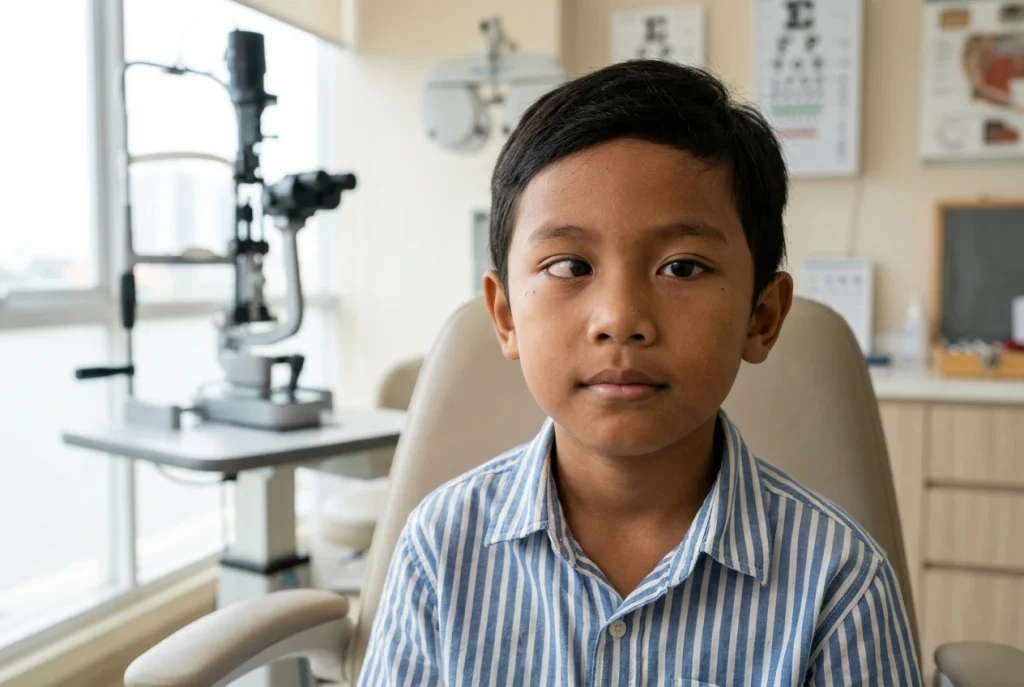
Strabismus is a condition in which both eyes do not point in the same direction at the same time. One eye may look straight ahead while the other eye turns inward, outward, upward, or downward.
Strabismus is one of the eye conditions commonly found in children. If it is not recognized and treated early, it can increase the risk of amblyopia (lazy eye) and interfere with the development of vision.
What Is Strabismus?
Under normal conditions, both eyes work together to send the same image to the brain, resulting in binocular vision.
In strabismus, coordination between the two eyes is impaired, causing the eyes to become misaligned. Strabismus may occur constantly or only at certain times, such as when a child is tired or focusing on a nearby object.
Types of Strabismus
Based on the direction of the eye deviation, strabismus is divided into:
- Esotropia: the eye turns inward.
- Exotropia: the eye turns outward.
- Hypertropia: the eye turns upward.
- Hypotropia: the eye turns downward.
Determining the type of strabismus is important because it can affect the choice of treatment.
Symptoms of Strabismus in Children
Parents can look for the following signs:
- One eye appears misaligned.
- The child frequently tilts their head when looking.
- The child closes one eye when exposed to sunlight.
- Difficulty judging the distance of objects.
- The child appears unable to focus properly when looking.
- Older children may complain of double vision.
In newborns, eyes that occasionally appear misaligned can still be part of normal development. However, if the condition persists or becomes more noticeable after the first few months of life, an eye examination is necessary.
What Causes Strabismus?
Strabismus can be caused by various factors, including:
1. Problems with Eye Muscle Coordination
Six muscles in each eye work together to ensure that both eyes move in alignment. Problems with the coordination of these muscles or the nerves that control them can cause strabismus.
2. Refractive Errors
Children with significant hyperopia (farsightedness) may develop accommodative esotropia, in which the eyes turn inward due to excessive focusing effort.
3. Congenital Factors
Some children develop strabismus during infancy or have a family history of the condition.
4. Neurological Disorders or Other Medical Conditions
In a small number of cases, strabismus may be associated with neurological disorders, congenital abnormalities, or certain medical conditions. Therefore, a comprehensive examination is necessary to determine the underlying cause.
Can Strabismus Go Away on Its Own?
Not always.
Persistent strabismus generally requires evaluation by an ophthalmologist. Delaying an examination may increase the risk of amblyopia, a condition in which the development of vision in one eye is not optimal. The earlier treatment is provided, the greater the chance of maintaining healthy visual development in children.
How Is Strabismus Diagnosed?
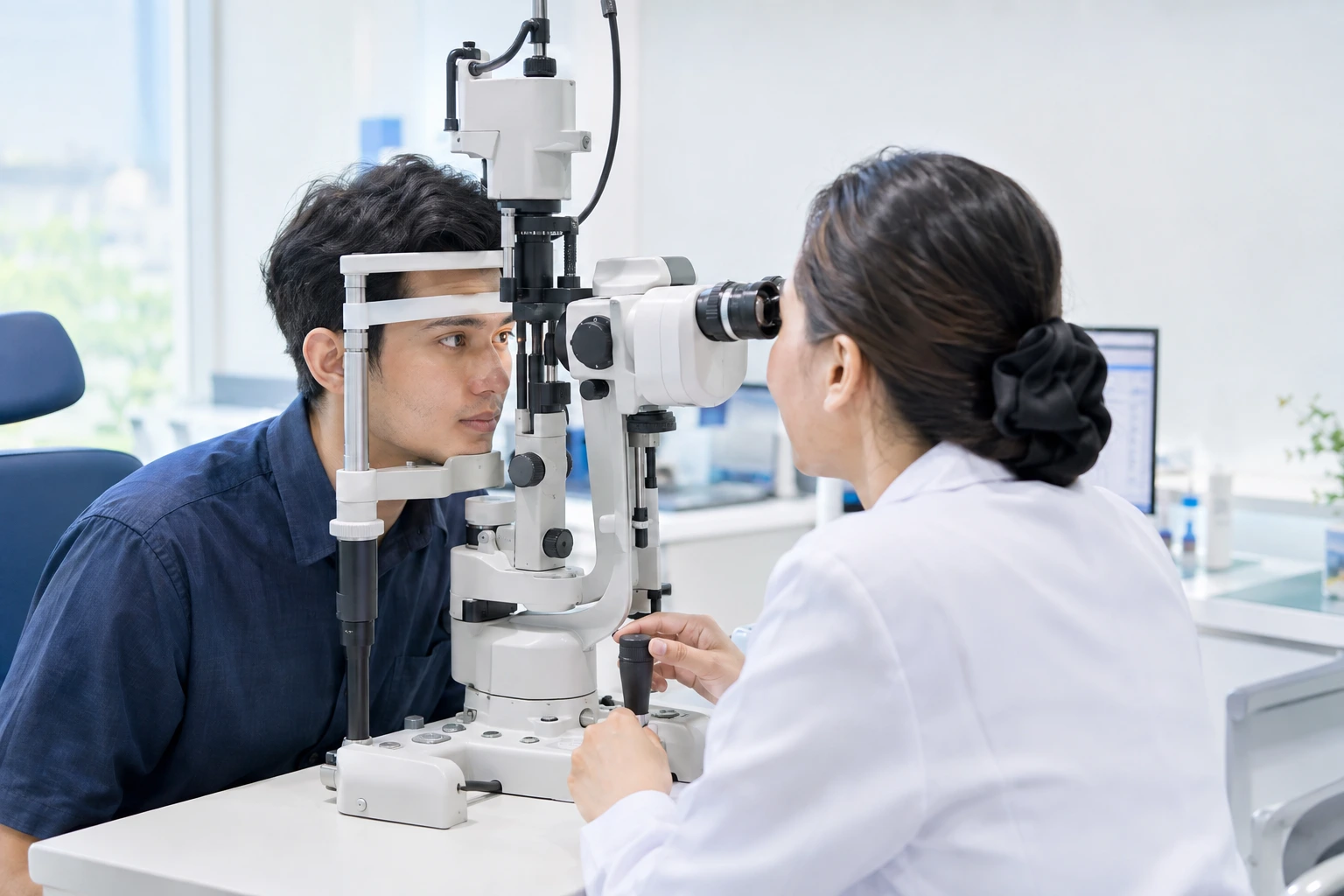
The doctor may perform examinations that include:
- Visual acuity testing appropriate for the child’s age.
- Examination of the alignment and movement of both eyes.
- Refraction testing to determine whether glasses are needed.
- A comprehensive eye examination after pupil dilation, when necessary.
These examinations help determine the type of strabismus and whether there are any associated conditions.
How Is Strabismus Treated?
Treatment depends on the cause and the child’s age.
Treatment options may include:
- Glasses, particularly for accommodative esotropia.
- Amblyopia treatment if lazy eye is present, such as patching or other methods as indicated.
- Specific exercises for certain types of strabismus when appropriate.
- Eye muscle surgery, when necessary, to improve eye alignment.
Not every child with strabismus requires surgery. Treatment decisions are made based on the results of the examination.
What Happens If Strabismus Is Not Treated?
Without appropriate treatment, strabismus can cause:
- Amblyopia (lazy eye).
- Impaired binocular vision.
- Reduced depth perception.
- An impact on learning activities and social interaction in some children.
Early detection and treatment generally provide better outcomes than delayed treatment.
When Should a Child Have an Eye Examination?
Have your child examined promptly if:
- The eyes still appear misaligned after approximately 4–6 months of age.
- One eye frequently turns inward or outward.
- The child frequently tilts their head when looking.
- The child closes one eye when looking at bright light.
- There is a family history of strabismus or amblyopia.
- A teacher or caregiver notices an abnormal eye position.
FAQ About Strabismus
During the first few months of life, a baby’s eyes may occasionally appear misaligned. However, if the condition persists or continues to be noticeable after approximately 4–6 months of age, the child should be examined by an ophthalmologist.
No. Many children can be treated with glasses or other therapies. Surgery is considered when necessary based on the examination results.
Yes. Strabismus is one of the main causes of amblyopia in children when it is not treated early.
Many children have good outcomes when the condition is diagnosed and treated as early as possible. The outcome depends on the cause, the child’s age when treatment begins, and adherence to treatment.
References:
American Association for Pediatric Ophthalmology and Strabismus (AAPOS). Strabismus.
American Academy of Ophthalmology. Strabismus in Children.
American Academy of Pediatrics. Vision Screening Recommendations.
Holmes JM, Clarke MP. Amblyopia. Lancet.
Wallace DK, et al. AAPOS Preferred Practice Patterns for Pediatric Strabismus.
Medically reviewed by: dr. Adhi Wicaksono, Sp.M