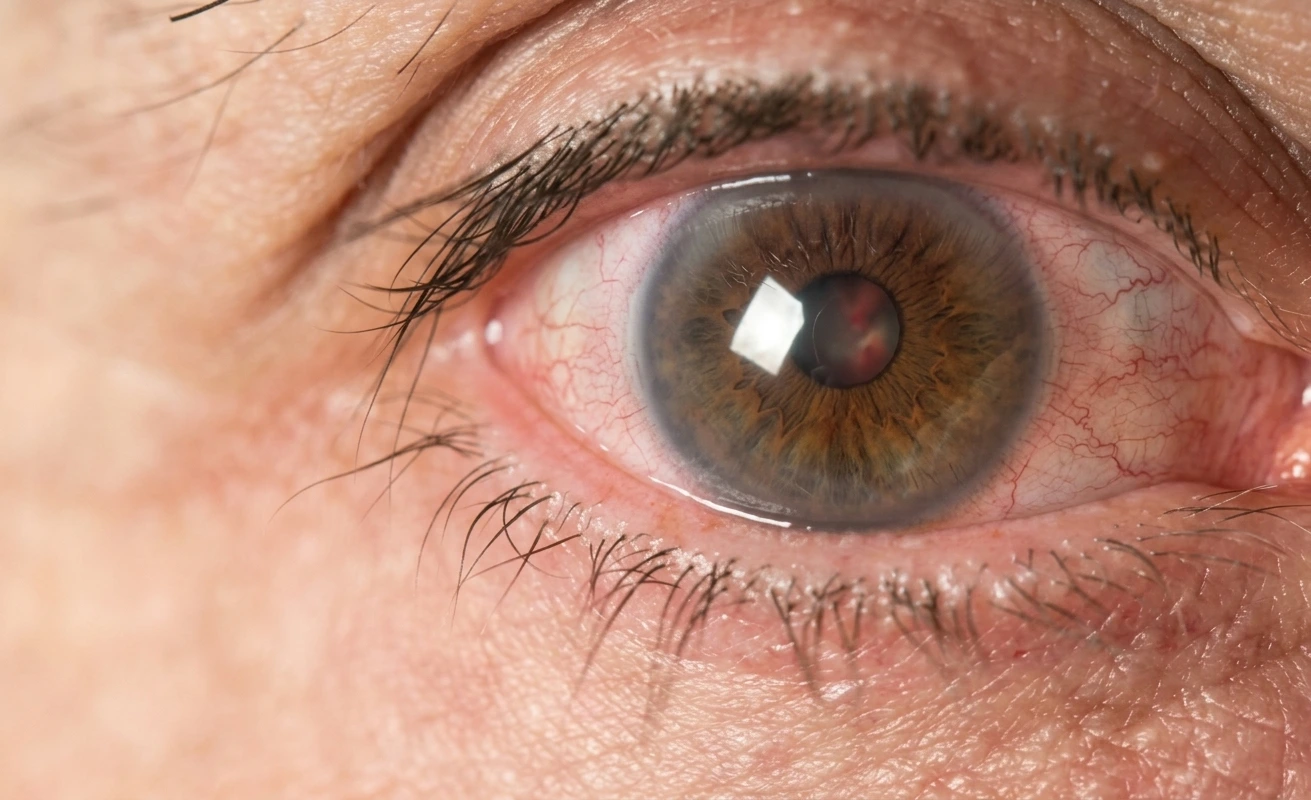
An eye that feels as though there is sand or grit inside may be caused by dry eye disease, irritation, a foreign object, eyelid disorders, or problems affecting the cornea. This symptom is commonly known as a foreign body sensation. Although it feels like something is in the eye, the cause is not always an actual foreign object.
If the sensation persists or is accompanied by eye pain, redness, light sensitivity, or blurred vision, you should have your eyes examined by an ophthalmologist.
Why Does My Eye Feel Like There Is Sand in It?
The surface of the eye contains many sensitive nerve endings that respond to irritation and changes in the eye’s surface. Problems involving the tear film, cornea, conjunctiva, or eyelids can all create the sensation that sand or a small object is trapped in the eye.
This feeling may also be accompanied by burning, stinging, itching, watery eyes, or a constant urge to rub the eyes.
Below are some of the most common causes of a foreign body sensation.
1. Dry Eye Disease
Dry eye disease is one of the most common causes of a gritty or sandy sensation in the eyes. The tear film plays an essential role in keeping the eye surface comfortable and maintaining clear vision.
When the tear film becomes unstable, the eye surface may become irritated, leading to symptoms such as:
- A gritty or sandy sensation
- Burning or stinging eyes
- Eye fatigue
- Fluctuating or blurred vision
- Light sensitivity
- Excessive tearing
2. A Foreign Object in the Eye
Dust, sand, eyelashes, or other tiny particles may enter the eye and suddenly cause a foreign body sensation.
Symptoms often appear suddenly and may be accompanied by watery or red eyes.
Avoid rubbing your eyes, as this may increase the risk of scratching the cornea. If the object does not come out naturally or the sensation persists, seek an eye examination.
3. Corneal Abrasion
The cornea is the clear front surface of the eye.
A small scratch on the cornea, known as a corneal abrasion, may cause the sensation that something is stuck inside the eye.
Other symptoms may include:
- Eye pain
- Watery eyes
- Red eyes
- Light sensitivity
- Difficulty opening the eye
4. Blepharitis
Blepharitis is an inflammation of the eyelids.
It can cause red, itchy eyelids along with crusting or flakes around the eyelashes. Many people with blepharitis also experience dry eyes, watery eyes, and a persistent foreign body sensation.
Because blepharitis can become chronic or recur frequently, proper eyelid hygiene and appropriate treatment are important for controlling symptoms.
5. Meibomian Gland Dysfunction
The meibomian glands, located along the eyelids, produce the oily layer of the tear film.
When these glands do not function properly, a condition known as meibomian gland dysfunction (MGD) develops. This causes tears to evaporate more quickly and is one of the leading causes of evaporative dry eye.
Common symptoms include:
- Dry eyes
- Burning eyes
- A gritty sensation
- Fluctuating vision
Reviews on meibomian gland dysfunction have shown a strong association between MGD, evaporative dry eye, and ocular surface disease.
6. Contact Lens Wear
Contact lenses may cause a foreign body sensation if they are not fitted properly or if the eye surface becomes irritated.
Wearing contact lenses for too long, poor lens hygiene, or sleeping while wearing certain types of contact lenses can increase the risk of corneal complications.
If contact lens wearers develop red eyes, pain, light sensitivity, or decreased vision, they should remove the lenses immediately and consult an ophthalmologist.
7. Conjunctivitis
Conjunctivitis can also cause the sensation that something is stuck in the eye.
Other symptoms may include:
- Red eyes
- Watery eyes
- Itching
- Eye discharge
Conjunctivitis may be caused by viruses, bacteria, or allergies. Since the causes differ, treatment also varies depending on the underlying condition.
Why Does My Eye Feel Like Something Is in It When Nothing Is There?
A foreign body sensation may occur even when no dust or particles are actually present.
Dry eye disease, blepharitis, meibomian gland dysfunction, and corneal surface disorders can all produce symptoms similar to having a foreign object in the eye.
For this reason, repeatedly rubbing the eye or trying to remove something that is not there may actually worsen the irritation.
Should You Rub an Eye That Feels Gritty?
No. It is best to avoid rubbing your eyes.
Rubbing may worsen irritation and increase the risk of damaging the eye surface, especially if a foreign particle is present.
If your symptoms begin after dust enters the eye, gently rinsing the eye with clean running water may help. However, never try to remove an object that is embedded or firmly attached to the eye yourself.
When Should You See an Ophthalmologist?
Seek medical attention immediately if the foreign body sensation:
- Does not improve or becomes worse
- Is accompanied by eye pain
- Causes significant eye redness
- Is associated with light sensitivity
- Causes blurred or reduced vision
- Occurs after an eye injury
- Follows exposure to chemicals
- Occurs in a contact lens wearer and is accompanied by pain
How Does an Ophthalmologist Determine the Cause?
An ophthalmologist will carefully examine the surface of the eye, eyelids, and cornea.
In certain cases, a special dye may be applied to identify damage or abnormalities on the corneal surface. The tear film and the function of the eyelid glands may also be evaluated if dry eye disease is suspected.
The type of examination will depend on each patient’s symptoms and clinical findings.
Don’t Ignore the Feeling of Sand in Your Eye
A gritty sensation does not always mean that dust or a foreign object is trapped in the eye.
Dry eye disease, meibomian gland dysfunction, blepharitis, corneal abrasion, and inflammation of the eye can all produce similar symptoms.
If the sensation keeps returning, does not improve, or is accompanied by redness, pain, light sensitivity, or blurred vision, schedule an eye examination.
If your eye constantly feels as though there is sand inside, consult an ophthalmologist to identify the underlying cause and receive the appropriate treatment.
FAQ About a Gritty Eye Sensation
This sensation may be caused by dry eye disease, blepharitis, meibomian gland dysfunction, or disorders affecting the corneal surface.
Yes. A gritty or sandy sensation is one of the most common symptoms of dry eye disease.
No. Rubbing your eyes can worsen irritation and may injure the surface of the eye.
Seek an eye examination if the symptoms persist or are accompanied by eye pain, redness, light sensitivity, or blurred vision.
Referensi:
Craig JP, et al. TFOS DEWS II Definition and Classification Report. The Ocular Surface. 2017.
National Eye Institute. Dry Eye.
National Eye Institute. Blepharitis.
Nelson JD, et al. TFOS DEWS II Introduction. The Ocular Surface. 2017.
Chhadva P, et al. Meibomian Gland Dysfunction and Dry Eye: A Review. Journal of Ophthalmology. 2017.
American Academy of Ophthalmology. Corneal Abrasion and Foreign Body.
Medically reviewed by: dr. Rahayu Widhyasti, Sp.M