Lazy eye, or amblyopia, is a vision development disorder in which the brain relies more on one eye than the other. As a result, vision in the affected eye does not develop properly, even though the eye itself may appear structurally normal.
Amblyopia is one of the most common causes of reduced vision in children. It is important to recognize the condition early because treatment generally provides better results when started during the visual development period.
What Is Lazy Eye?
During infancy and childhood, the brain learns to process visual information from both eyes.
If one eye does not provide a clear image or the eyes are not properly aligned, the brain may begin to ignore signals from that eye. If this continues over time, the visual ability of that eye may develop less effectively than that of the healthy eye. This is why amblyopia is commonly referred to as lazy eye, although the underlying problem involves the development of the visual system.
Causes of Lazy Eye
1. Strabismus (Crossed Eyes)
Strabismus is one of the most common causes of amblyopia.
When the eyes are not properly aligned, the brain may ignore the image from one eye to prevent double vision.
2. Refractive Errors
A significant difference in nearsightedness, farsightedness, or astigmatism between the two eyes can cause one eye to produce a blurrier image.
If left uncorrected, that eye may be at risk of developing amblyopia.
3. Blockage of Light
Conditions such as congenital cataracts, severe ptosis, or corneal abnormalities that obstruct the path of light can interfere with normal visual development.
Symptoms of Lazy Eye
Amblyopia often does not cause noticeable symptoms in children.
Some signs that parents can look for include:
- One eye appears to turn or drift.
- The child frequently closes or covers one eye when looking at something.
- Difficulty reaching for or catching objects.
- Tilting the head when looking.
- Difficulty reading in some children.
- An eye examination shows a difference in visual acuity between the two eyes.
Because the symptoms can be subtle, regular eye examinations are important for children.
Is Lazy Eye the Same as Strabismus?
No.
Strabismus is one of the causes of amblyopia, but not every child with lazy eye has visibly misaligned eyes. Conversely, not every child with strabismus develops amblyopia to the same degree. Although the two conditions are related, they are different diagnoses.
How Is Lazy Eye Diagnosed?
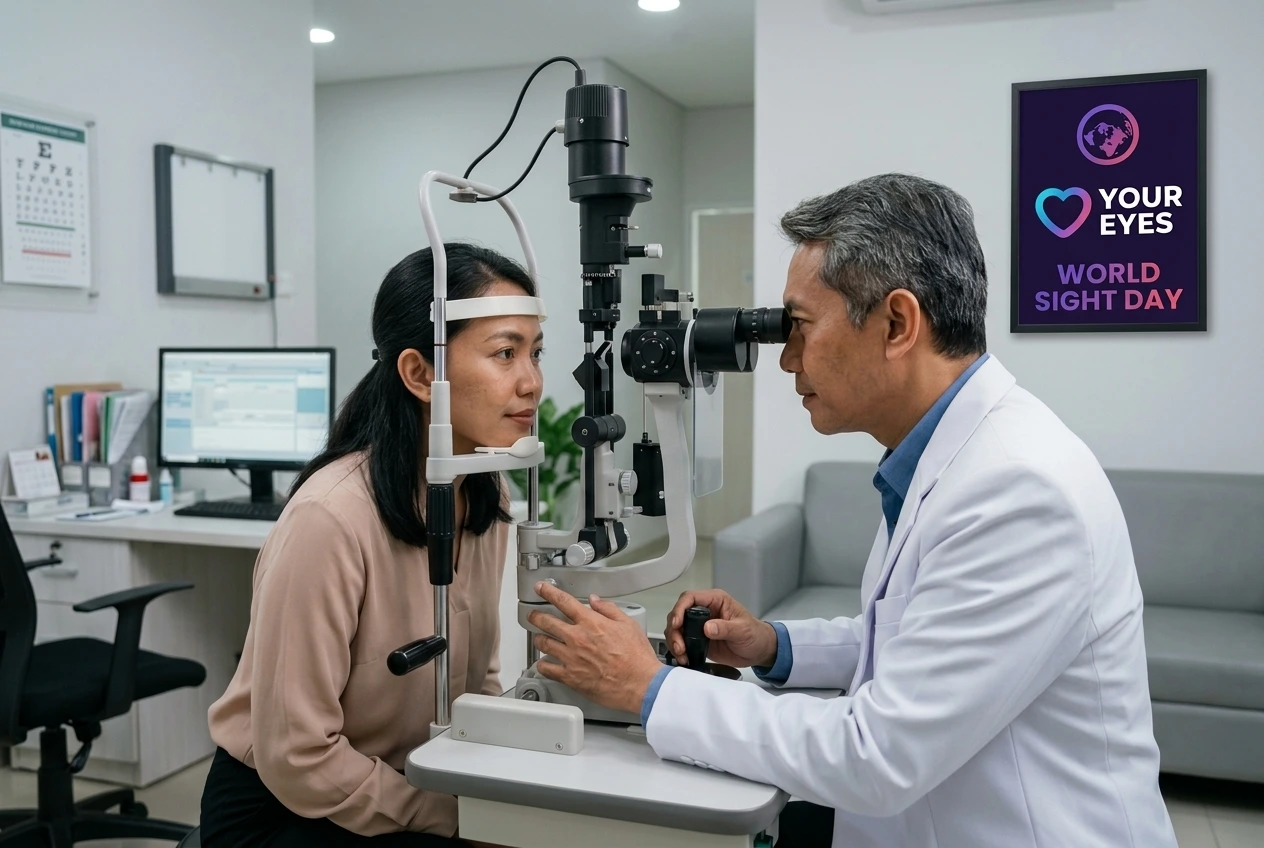
An ophthalmologist may perform examinations that include:
- Age-appropriate visual acuity testing.
- A refraction examination, sometimes after using eye drops to dilate the pupils.
- Evaluation of eye alignment and eye movements.
- A comprehensive eye health examination.
The goal is to identify the cause of amblyopia while also ruling out other conditions that may affect vision.
How Is Lazy Eye Treated?
Treatment aims to help the brain use the amblyopic eye more effectively.
Treatment may include:
1. Correcting Refractive Errors
If the child needs glasses, wearing them regularly is an important first step in treatment.
2. Therapy for the Dominant Eye
An ophthalmologist may recommend an eye patch (patching) or another appropriate method to encourage the weaker eye to receive more visual stimulation. The duration of treatment is determined based on the child’s age and the severity of amblyopia.
3. Treating the Underlying Cause
If amblyopia is caused by strabismus, congenital cataracts, or another condition, the underlying cause also needs to be addressed.
4. Can Lazy Eye Be Cured?
Many children experience improved vision when treatment is started early and followed consistently. The longer amblyopia remains untreated, the more difficult it may be to achieve optimal results. However, the treatment plan is determined based on each child’s age, underlying cause, and examination results.
5. When Should a Child Have an Eye Examination?
An eye examination should be scheduled promptly if:
- The eyes appear misaligned.
- The child frequently squints or closes one eye.
- There is a family history of amblyopia or strabismus.
- A parent or teacher suspects a vision problem.
- A school vision screening indicates an abnormal result.
FAQ About Lazy Eye
Many cases can improve when treated early and when the child follows the treatment recommended by the ophthalmologist.
Visual development occurs most rapidly during childhood. Therefore, early detection and treatment are strongly recommended.
No. However, strabismus is one of the major risk factors for developing amblyopia.
For some children, glasses can be an important part of treatment. However, some cases may also require patching or treatment of the underlying cause.
Reference:
American Association for Pediatric Ophthalmology and Strabismus (AAPOS). Amblyopia.
American Academy of Ophthalmology. Amblyopia Preferred Practice Pattern.
American Academy of Pediatrics. Vision Screening Guidelines.
Holmes JM, Clarke MP. Amblyopia. Lancet.
Pediatric Eye Disease Investigator Group (PEDIG). Randomized Trials in Amblyopia Treatment.
Medically reviewed by: dr. Adhi Wicaksono, Sp.M