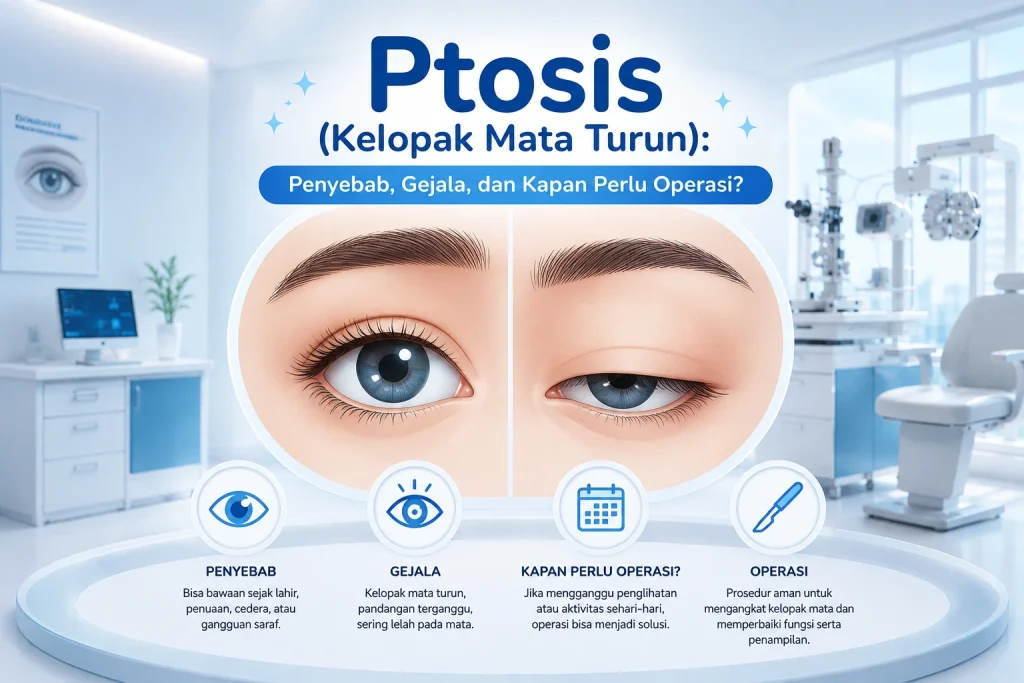
Ptosis is a condition in which the upper eyelid droops lower than its normal position. The drooping may affect one eye or both eyes. In some people, it can obstruct the visual field and interfere with daily activities such as reading, working, or driving.
Ptosis can occur in both children and adults. Its causes vary and may include the natural aging process, weakness of the muscle that lifts the eyelid, nerve disorders, or congenital conditions present at birth.
What Is Ptosis?
The upper eyelid is lifted by the levator palpebrae superioris muscle. When this muscle becomes weak or the nerves controlling it are impaired, the eyelid may droop and partially cover the eye.
The severity of ptosis varies from person to person. In some cases, the eyelid droops only slightly. In others, it may cover part of the pupil and interfere with vision.
Symptoms of Ptosis
Common signs and symptoms of ptosis include:
- A drooping upper eyelid
- One eye appearing smaller than the other
- Difficulty opening the eye fully
- Reduced upper visual field
- Frequently raising the eyebrows to help lift the eyelid
- Tilting the head backward to see more clearly
- Eye fatigue after reading or prolonged work
In children, severe ptosis may interfere with normal visual development if left untreated.
What Causes Ptosis?
1. Age-Related Ptosis (Aponeurotic Ptosis)
This is the most common cause of ptosis in adults.
As people age, the tendon of the levator muscle may stretch or partially detach, causing the upper eyelid to gradually droop.
2. Congenital Ptosis
Some babies are born with a levator muscle that has not developed properly.
Congenital ptosis should be evaluated early because it may increase the risk of amblyopia (lazy eye) if the eyelid covers the pupil.
3. Nerve Disorders
Certain neurological conditions can cause ptosis, including disorders affecting the oculomotor nerve or specific neuromuscular diseases.
In these cases, ptosis is often accompanied by other symptoms, such as double vision or limited eye movement.
4. Injury
Trauma to the eyelid or the area around the eye can damage the muscles or tendons responsible for lifting the eyelid.
5. Eyelid Masses or Lumps
A large lump on the eyelid can increase its weight, making the eyelid appear droopy. A comprehensive eye examination is necessary to identify the underlying cause.
Is Ptosis Dangerous?
Not all cases of ptosis are considered a medical emergency.
However, ptosis requires prompt evaluation if it:
- Covers the pupil and affects vision
- Develops suddenly
- Is accompanied by double vision
- Occurs with weakness of the facial muscles or limbs
- Develops after an injury
In these situations, an immediate eye examination is important to determine the underlying cause.
How Is Ptosis Diagnosed?
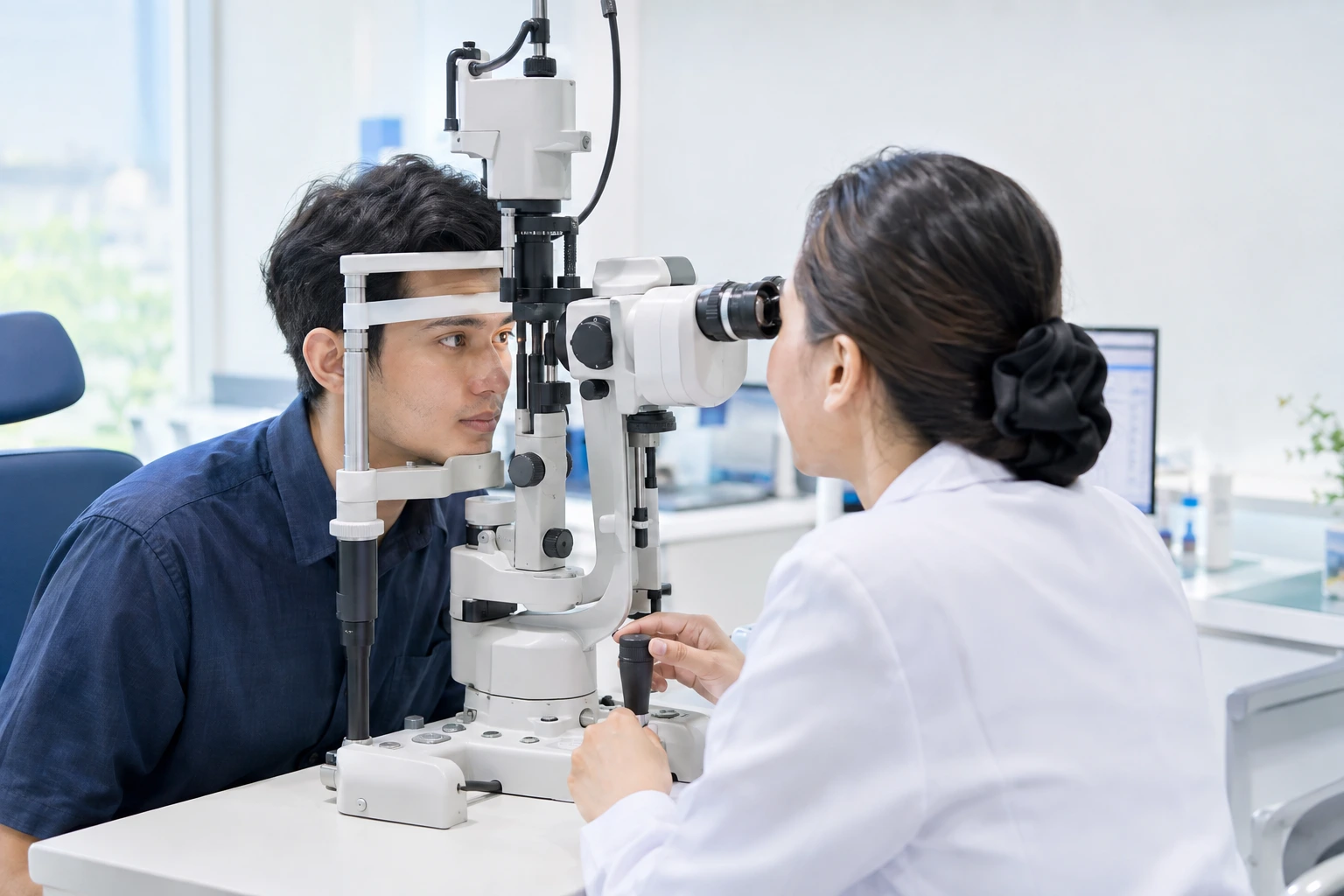
An ophthalmologist will evaluate several aspects of your eye, including:
- The position of both upper eyelids
- Levator muscle function
- Visual field
- Eye movements
- Corneal health
- Signs of nerve disorders or other related medical conditions
In some cases, additional diagnostic tests may be recommended based on the suspected cause.
Does Every Case of Ptosis Require Surgery?
No.
Treatment depends on both the underlying cause and the severity of the condition.
Surgery is generally considered when ptosis:
- Interferes with vision
- Covers the pupil
- Affects daily activities
- Causes an abnormal head posture
- May interfere with visual development in children
Your ophthalmologist will determine whether surgery is the most appropriate treatment after a comprehensive examination.
How Is Ptosis Surgery Performed?
The goal of ptosis surgery is to improve the position of the upper eyelid for both better function and appearance. The surgical technique is selected based on the strength of the levator muscle, the underlying cause of ptosis, and each patient’s individual condition.
The primary objectives of surgery are to improve the visual field and achieve better eyelid symmetry. Surgical outcomes may vary between individuals.
Can Ptosis Recur?
Yes.
In some cases, particularly those related to aging or certain underlying medical conditions, ptosis may recur over time. Regular follow-up visits after surgery allow your ophthalmologist to monitor healing and evaluate the long-term surgical outcome.
When Should You See an Eye Doctor Immediately?
Seek prompt medical attention if you experience:
- A drooping eyelid that develops suddenly
- Ptosis accompanied by double vision
- Difficulty moving the eye
- An eyelid that covers most of the pupil
- Ptosis following trauma or an injury
- Ptosis occurring in a baby or child
Early diagnosis is essential to identify the underlying cause and help prevent vision problems, especially in children.
FAQ About Ptosis
It depends on the underlying cause. Some cases may only require observation or treatment of the underlying condition, while ptosis that interferes with vision or daily activities may require surgery.
No. Ptosis can be present at birth (congenital ptosis) or develop later in adulthood.
No. Ptosis refers to a drooping upper eyelid, whereas a swollen eyelid is caused by enlargement of the eyelid tissues due to inflammation or other underlying conditions.
No. For many patients, ptosis surgery is performed to improve the visual field and restore eyelid function, not solely to enhance appearance.
References:
American Society of Ophthalmic Plastic and Reconstructive Surgery (ASOPRS). Ptosis.
American Academy of Ophthalmology. Ptosis (Droopy Eyelid).
Mayo Clinic. Droopy Eyelid (Ptosis).
Finsterer J. Ptosis: Causes, Presentation, and Management. Aesthetic Plastic Surgery.
Cahill KV, Bradley EA, et al. Functional Indications for Upper Eyelid Ptosis Surgery. Ophthalmology.
Medically reviewed by: dr. Claudia Hartomuljono, Sp.M