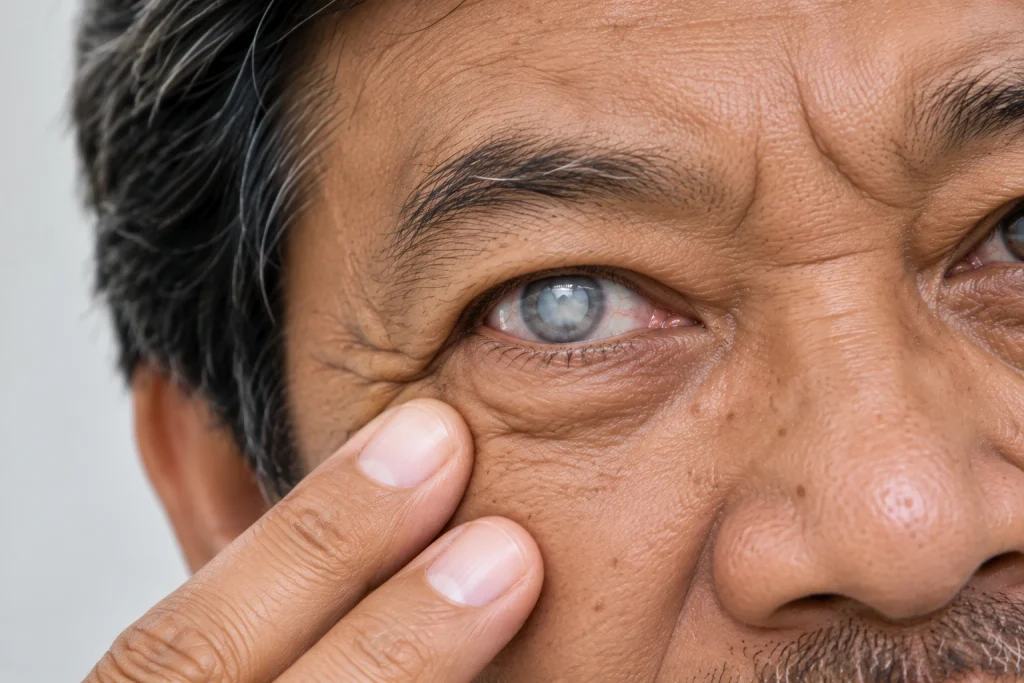
Vision that was once clear may gradually become cloudy, cause increased glare when looking at light, or make colors appear less vibrant. One condition that can cause these changes is a cataract. This condition occurs when the eye’s naturally clear lens becomes cloudy, preventing light from passing through and focusing optimally on the retina.
Cataracts are commonly associated with the aging process, but they do not only affect older adults. Health conditions, eye injuries, certain medications, and congenital factors can also play a role. By understanding the causes and symptoms, you can recognize changes in your vision and know when an eye examination may be necessary.
What Is a Cataract?
A cataract is a condition in which the natural lens inside the eye becomes cloudy. Under normal circumstances, the lens helps transmit and focus light onto the retina so that objects can be seen clearly. When the proteins inside the lens undergo changes, the lens may gradually lose its transparency. As a result, vision can become blurred, cloudy, or less sharp.
Cataracts can develop gradually. In the early stages, changes in vision may not be very noticeable. Over time, the cloudiness can increasingly affect vision and daily activities. However, the severity of symptoms varies from person to person.
What Causes Cataracts?
Aging is the factor most commonly associated with cataract formation. As people get older, the protein structure within the lens can change, causing the lens to lose its clarity. Nevertheless, several other factors can also increase the risk of developing cataracts.
- Diabetes: This condition is associated with an increased risk of cataracts.
- Eye injuries or trauma: Impact or injury can affect the structure of the lens.
- Certain medications: Long-term corticosteroid use may be associated with cataract formation. Do not stop taking any medication without your doctor’s guidance.
- Family history and genetic factors: Some cataracts may be associated with hereditary factors.
- Excessive exposure to radiation or sunlight: This may contribute to the risk of developing cataracts.
- Smoking and other health factors: Smoking is known to be associated with an increased risk.
Not all cases have a single identifiable cause. Doctors need to evaluate a patient’s medical history and eye condition to understand the factors that may contribute to cataract formation.
What Are the Different Types of Cataracts?
Cataracts can be classified based on the location of the cloudiness within the lens or according to their cause and time of onset. In general, the commonly described types based on location include:
- Nuclear cataract: Cloudiness primarily develops in the central part, or nucleus, of the lens. These changes can affect visual clarity and color perception.
- Cortical cataract: Cloudiness develops in the outer part of the lens, known as the cortex, and may appear as streaks or spoke-like patterns.
- Posterior subcapsular cataract: Cloudiness develops at the back of the lens, near the lens capsule, and may interfere more significantly with vision under certain conditions.
In addition to classification based on location, other types include age-related cataracts, traumatic cataracts, complicated cataracts that develop as a result of complications from other eye diseases, and congenital cataracts that are present at birth. The classification and clinical terminology should be determined based on the doctor’s examination.
What Cataract Symptoms Should You Recognize?
Cataract symptoms can develop gradually. Possible symptoms include:
- Blurred vision or the sensation of looking through a foggy window.
- Increased sensitivity to glare when looking at bright lights or vehicle headlights.
- Difficulty seeing at night.
- Colors appearing duller or more yellowish.
- Double vision in one eye in certain cases.
- Frequent changes in eyeglass prescriptions.
- Needing brighter lighting when reading or performing close-up tasks.
These symptoms do not necessarily mean that someone has cataracts. Blurred vision can also be caused by refractive errors, corneal disorders, retinal problems, or other eye conditions. An examination by an ophthalmologist is necessary to determine the underlying cause.
Do Cataracts Only Affect Older Adults?
No. Cataracts are more commonly associated with the aging process, but they can also occur at a younger age, even at birth. In younger individuals, factors such as eye injuries, diabetes, certain steroid medications, genetic factors, or other eye conditions may play a role.
When Should You Have an Eye Examination?
Consider having your eyes examined when your vision starts becoming blurry, glare becomes increasingly bothersome, you experience difficulty seeing at night, colors appear different, or your daily activities begin to be affected. An examination is also important if you have a history of eye injuries or health conditions that may increase your risk of eye disorders.
An eye examination helps your doctor determine whether changes in your vision are related to cataracts or another underlying condition. If cataracts are diagnosed, not every case requires immediate surgery. The timing and choice of treatment depend on the examination results, the impact on daily activities, the condition of the eyes, and individual visual needs.
To find out whether your symptoms are related to cataracts and explore appropriate treatment options, consult an ophthalmologist.
After understanding what cataracts are, the next common question is when the condition needs treatment and whether surgery is necessary right away. Continue reading [When Should Cataracts Be Operated On? Recognize the Warning Signs] to understand how doctors evaluate cataracts and determine the most appropriate next steps.
Medically Reviewed by:
dr. Rianti Wulandari Pratiwi, Sp.M
Ophthalmologist
Mayapada Eye Centre @ MHJS
Last Updated: November 11, 2026
Reference:
National Eye Institute (NEI). Causes of Cataracts.
NHS. Cataracts in adults.
Kementerian Kesehatan RI, Direktorat Jenderal Kesehatan Lanjutan. Katarak: Mengenal Penyakit, Faktor Risiko, dan Penanganannya.
This information is for educational purposes and is not a substitute for consultation with a doctor. The stages of examination and treatment may vary and will be tailored to each patient’s medical condition.