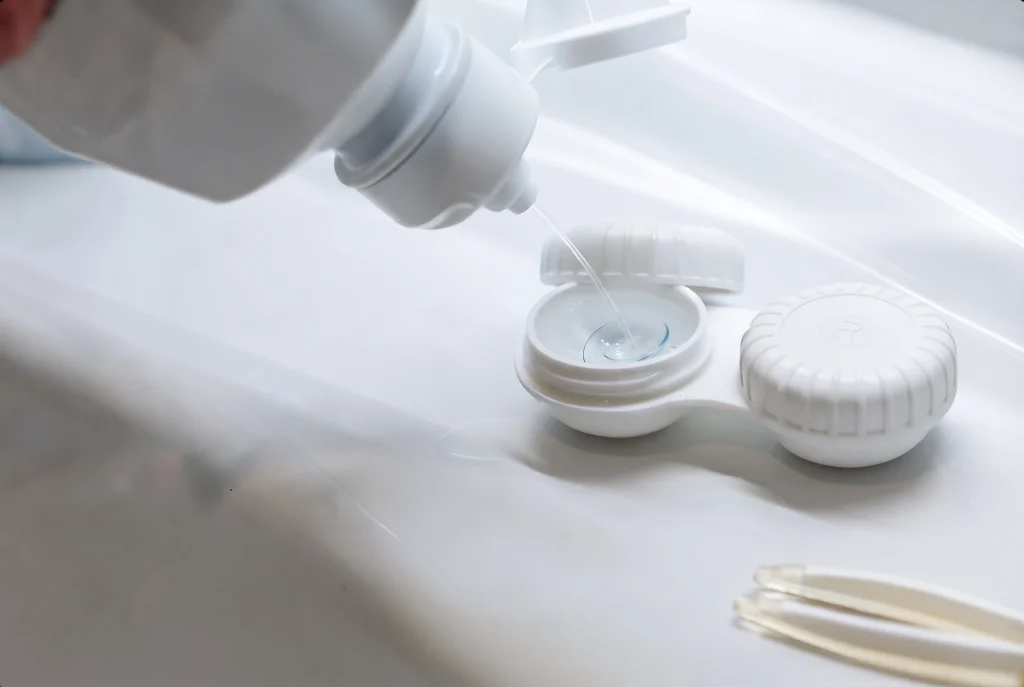
Ortho-K uses specialized contact lenses that are worn while sleeping. Since the lenses come into direct contact with the surface of the eyes and are worn overnight, maintaining the cleanliness of your hands, lenses, and storage case is an essential part of your daily routine. Improper lens care, as well as failure to follow instructions and attend scheduled check-ups, can increase the risk of complications, including corneal infections.
1. Wash and Dry Your Hands Before Handling the Lenses
Always clean your hands before inserting, removing, or cleaning your lenses. Dry your hands using a clean, lint-free material. This habit helps reduce the transfer of dirt and microorganisms from your hands to the lenses.
2. Use the Recommended Lens Care Solutions
Use the cleaning, rinsing, and disinfecting solutions specified by your eye care practitioner or the product instructions for your particular Ortho-K lenses. Lens care systems are not always interchangeable. Do not mix solutions, use saliva, or apply any products that have not been recommended.
3. Avoid Exposing Your Lenses to Water of Uncertain Cleanliness
Do not rinse or store your lenses using tap water, bottled mineral water, boiled water, or homemade solutions. Water can carry microorganisms that may cause corneal infections. If your lenses are accidentally exposed to water, follow your clinic’s instructions before wearing them again.
4. Clean and Store Your Lenses According to Instructions
Clean your lenses after removal using the technique and duration demonstrated during your training. Store them in a designated lens case with the appropriate solution, and replace the solution according to the instructions. Do not simply add fresh solution to the old solution. Make sure the lens case is also cleaned, dried, and replaced as recommended.
5. Do Not Wear Damaged Lenses
Inspect your lenses before wearing them. Cracks, chips, scratches, changes in shape, or deposits that cannot be removed should be evaluated by your clinic. Never attempt to repair the lenses yourself.
6. Follow the Prescribed Wearing and Replacement Schedule
Wear your lenses according to the prescribed schedule and replace the lenses and accessories as recommended by your eye care practitioner and the manufacturer’s instructions. Do not share your lenses or personal accessories with others. Replacement schedules may depend on the lens type, physical condition, and care system used.
7. Do Not Skip Regular Follow-Up Appointments
Follow-up examinations are necessary to assess eye health, lens fit, corneal changes, and adherence to the prescribed care routine. Clinical practice guidelines emphasize proper handling and hygiene education, as well as scheduled aftercare examinations.
Recognize the Signs of Infection or Complications
Pain, eye redness, light sensitivity, excessive tearing, unusual eye discharge, or sudden blurred vision may indicate an eye problem. Stop wearing your lenses and contact your eye doctor immediately. Contact lens-related corneal infections can be serious conditions that require prompt medical evaluation. Wearing contact lenses while sleeping is a risk factor that users should understand, so safety instructions must never be ignored.
Why Is Hygiene Important When Using Ortho-K?
Ortho-K requires overnight lens wear. Clinical practice guidelines emphasize that improper use, poorly fitting lenses, inadequate hygiene, and failure to attend follow-up examinations can lead to complications such as corneal ulcers. Therefore, safety depends not only on the lens technology but also on proper daily use and care. If you would like to find out whether Ortho-K is suitable for you or your child, schedule a consultation with an eye doctor through Mayapada Eye Centre’s [Ortho-K Service].
Medically Reviewed by:
DR. dr. Umar Mardianto, Sp.M (K)
Ophthalmologist
Mayapada Eye Centre @ MHJS and @ Sudirman
Last Updated: November 17, 2026
Reference:
Optometrists and Opticians Board, Singapore. Professional Practice Guidelines on Orthokeratology.
American Academy of Ophthalmology. Bacterial Keratitis Preferred Practice Pattern.
This information is for educational purposes and is not a substitute for consultation with a doctor. The stages of examination and treatment may vary and will be tailored to each patient’s medical condition.