Find answers to the most frequently asked questions about PRESBYOND at Mayapada Eye Centre, including presbyopia (age-related vision changes), suitable candidates, differences from LASIK, treatment costs, recovery time, and potential side effects. This information can help you better understand your vision correction options for patients aged 40 and above before consulting with an ophthalmologist.
List of Contents
- 1. What Is Presbyopia?
- 2. What Is PRESBYOND?
- 3. Who Is a Suitable Candidate for PRESBYOND?
- 4. What Is the Difference Between PRESBYOND and LASIK?
- 5. Is PRESBYOND Safe?
- 6. Is the PRESBYOND Procedure Painful?
- 7. How Long Does the PRESBYOND Procedure Take?
- 8. How Much Does PRESBYOND Cost in Jakarta?
- 9. What Is the Recovery Process Like After PRESBYOND?
- 10. What Are the Possible Side Effects or Risks After PRESBYOND?
- 11. Are PRESBYOND Results Permanent?
- 12. Can Patients Who Previously Had LASIK or SMILE Pro Undergo PRESBYOND?
- 13. What Happens If Cataracts Develop in the Future?
- 14. Where Can I Undergo PRESBYOND in Jakarta?
1. What Is Presbyopia?
Presbyopia, commonly known as age-related farsightedness or aging eyes, is a condition in which the eyes gradually lose the ability to focus on nearby objects because the eye’s natural lens becomes less flexible with age.
This condition is commonly noticed after the age of 40, for example when reading small text, using a smartphone, or working on a computer at close range.
Presbyopia is a natural part of the eye’s aging process and can affect almost everyone.
2. What Is PRESBYOND?
PRESBYOND is a laser vision correction procedure designed to help manage presbyopia, allowing patients to reduce their dependence on reading glasses or multifocal lenses.
This technology uses the concept of Laser Blended Vision, an approach that helps both eyes work together more comfortably for near, intermediate, and distance vision. PRESBYOND is a vision correction technology developed by ZEISS.
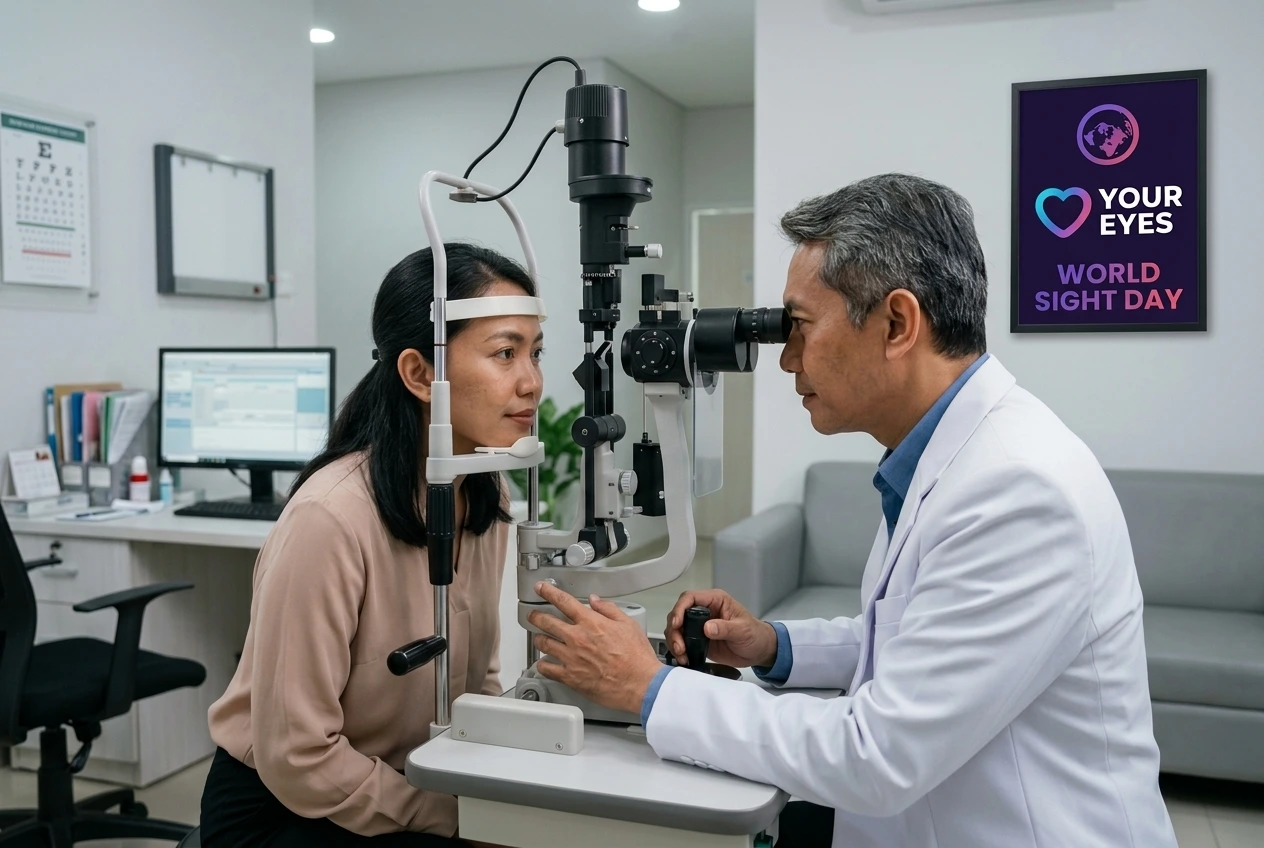
At Mayapada Eye Centre, the procedure is performed only after patients undergo a comprehensive eye evaluation to determine treatment eligibility.
3. Who Is a Suitable Candidate for PRESBYOND?
In general, suitable PRESBYOND candidates are patients who:
– Are around 40 years old or older
– Have started experiencing difficulty reading at close distances
– Wish to reduce dependence on reading glasses
– Have healthy eyes overall
– Do not have certain eye conditions such as cataracts or other disorders that may affect treatment eligibility
– Are in good general health
Final eligibility is determined through a comprehensive eye examination conducted by an ophthalmologist.
4. What Is the Difference Between PRESBYOND and LASIK?
LASIK is generally used to help correct refractive errors such as nearsightedness, farsightedness, and astigmatism.
PRESBYOND, on the other hand, is specifically designed to help address presbyopia in patients aged 40 and above who require vision correction for multiple distances.
The most suitable procedure will be determined based on the patient’s age, eye condition, visual needs, and examination results.
5. Is PRESBYOND Safe?
PRESBYOND is one of the laser-based vision correction options available for patients who meet the appropriate medical criteria.
However, like any medical procedure, it still carries potential risks and side effects. A thorough eye examination is therefore essential before treatment is performed.
The doctor will help determine whether this procedure is suitable for the patient’s eye condition.
6. Is the PRESBYOND Procedure Painful?
In general, PRESBYOND is not considered painful because anesthetic eye drops are administered before the procedure begins.
Some patients may experience mild pressure or brief discomfort during the treatment.
7. How Long Does the PRESBYOND Procedure Take?
PRESBYOND is an outpatient procedure with a relatively short treatment duration.
In general, the total time required for preparation, treatment, and initial observation is approximately 20–30 minutes, depending on each patient’s condition.
Most patients are able to return home on the same day.
8. How Much Does PRESBYOND Cost in Jakarta?
The cost of PRESBYOND at Mayapada Eye Centre may vary for each patient depending on their eye condition, screening results, and the doctor’s recommendation.
To obtain the most accurate estimate for PRESBYOND or presbyopia correction costs in Jakarta, patients need to undergo a consultation first.
9. What Is the Recovery Process Like After PRESBYOND?
Recovery after PRESBYOND is generally relatively quick, although the visual adaptation process may vary between individuals.
Some patients may resume light activities within a short period according to the doctor’s recommendations. However, adjusting to clear vision at multiple distances may take some time depending on each individual’s response.
Post-procedure follow-up appointments are important to monitor recovery progress.
10. What Are the Possible Side Effects or Risks After PRESBYOND?
Like any medical procedure, PRESBYOND carries potential side effects and risks.
Some temporary symptoms that may occur include:
– Dry eyes
– Light sensitivity
– Glare or halos around lights
– Vision that is still adapting during the early recovery phase
The doctor will explain the potential benefits and risks based on the patient’s eye condition.
11. Are PRESBYOND Results Permanent?
PRESBYOND works by reshaping the cornea, making the correction long-lasting.
However, the natural aging process of the eyes continues over time, meaning visual needs may still change in the future.
The doctor will explain realistic expectations based on each patient’s individual condition.
12. Can Patients Who Previously Had LASIK or SMILE Pro Undergo PRESBYOND?
In some cases, patients who have previously undergone LASIK, PRK, or SMILE Pro may still be considered suitable candidates for PRESBYOND, depending on the current condition of the cornea and the results of the eye evaluation.
A comprehensive examination is required to determine treatment eligibility.
13. What Happens If Cataracts Develop in the Future?
PRESBYOND works on the cornea, whereas cataracts develop in the eye’s natural lens, so they are different conditions.
If cataracts develop in the future, the ophthalmologist will evaluate the most appropriate treatment options based on the patient’s eye condition at that time.
14. Where Can I Undergo PRESBYOND in Jakarta?
PRESBYOND is available at Mayapada Eye Centre.
Mayapada Eye Centre
Mayapada Hospital Jakarta Selatan, Tower 2, Lantai 3
Jl. Lebak Bulus I No. 29, Jakarta Selatan
Patients will first undergo a consultation and comprehensive eye screening before determining treatment eligibility.