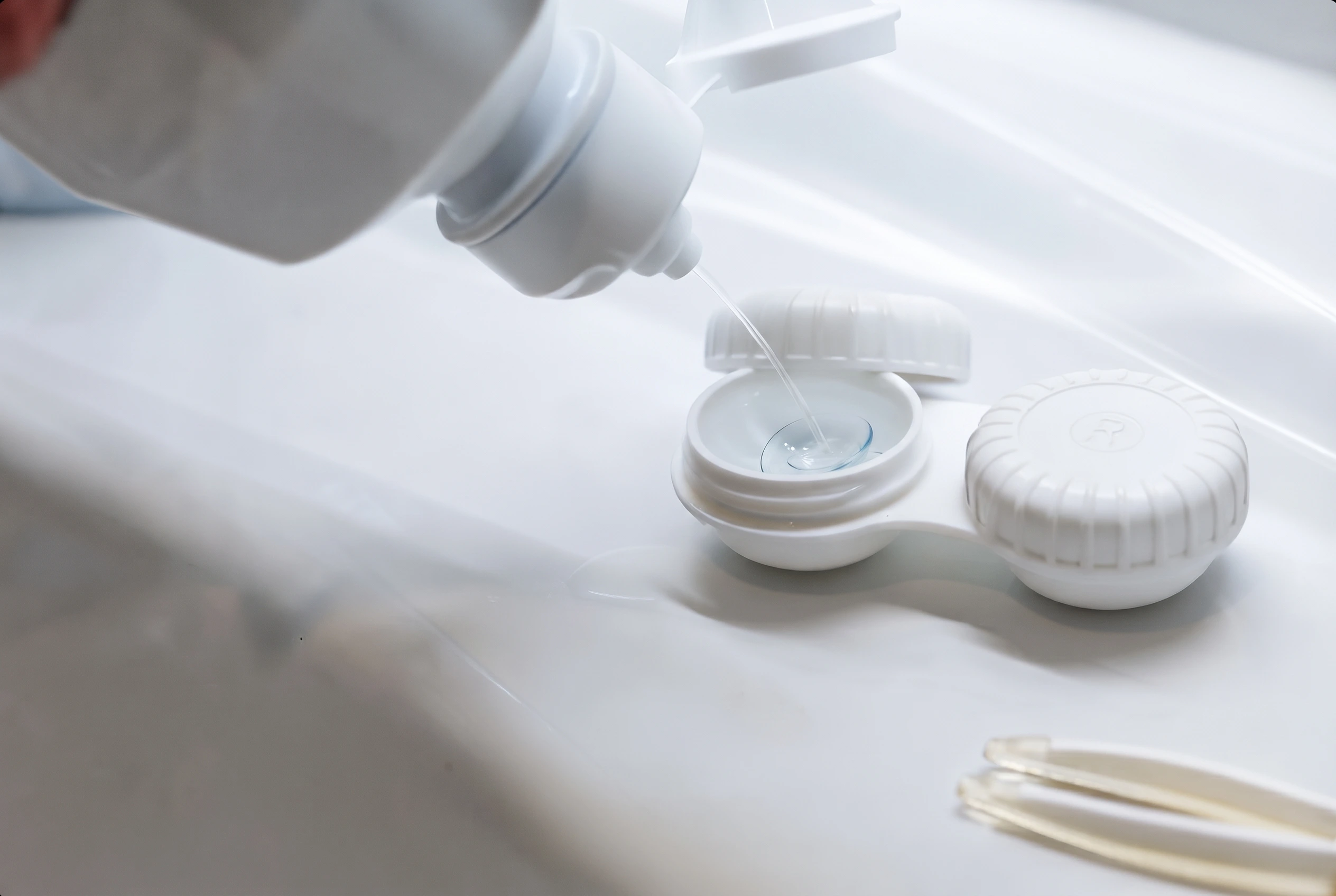
Ortho-K, or Orthokeratology, uses specially designed rigid gas permeable contact lenses that are worn while sleeping. When the eyes are closed, pressure from the eyelids on the lenses, together with the tear film between the lenses and the cornea, produces controlled and temporary changes to the shape of the front surface of the cornea. After the lenses are removed in the morning, these changes can help light focus more accurately, resulting in clearer distance vision during the day. Ortho-K is not a surgical procedure and does not permanently alter the cornea.
How Do Ortho-K Lenses Work?
Modern Ortho-K lenses generally feature specialized geometry designed to create a correction zone on the cornea. In cases of myopia, the primary changes involve flattening the central cornea and reshaping the surrounding area. Research has described changes in the distribution of corneal epithelial cells, particularly relative thinning in the central area and relative thickening in the mid-peripheral area. These optical changes reduce the refractive power of the cornea, helping to correct myopia. The mechanism does not involve pressing or ‘massaging’ the eyeball, and the specific response may vary from person to person.
Steps for Using Ortho-K Lenses
The following steps provide a general overview. Always follow the product instructions and your eye doctor’s recommendations as your primary guide.
1. Make Sure Your Hands and Application Area Are Clean
Before handling the lenses, wash and dry your hands according to the instructions provided during your training. Only use the solutions and accessories recommended for your specific lens system. Avoid using tap water or regular water on the lenses or their storage case.
2. Inspect the Lenses Before Insertion
Make sure the lenses are clean, free from cracks or scratches, and show no signs of damage. If a lens appears damaged or contaminated, do not insert it until you have consulted your eye care clinic. Any rinsing procedures or the use of rewetting drops should follow the specific instructions provided for your lenses and by your eye care practitioner.
3. Insert the Lenses Before Bed Using the Recommended Technique
The lenses should be inserted before going to bed at night. Users should follow the insertion technique taught during their training session, including proper lens positioning and how to ensure the lenses sit comfortably on the eyes. If the lenses cause significant discomfort, pain, or unusual changes in vision, do not force yourself to continue wearing them.
4. Wear the Lenses According to Your Prescribed Sleep Schedule
The lenses work while your eyes are closed during sleep. The duration and frequency of wear must follow your prescription and the clinic’s instructions. Do not change your wearing schedule on your own. Clinical practice guidelines describe overnight wear as the standard approach to Ortho-K, but the appropriate schedule is determined based on the lenses, the individual’s eye condition, and their response to treatment.
5. Remove the Lenses After Waking Up
After waking up, remove the lenses using the technique you have been taught. If a lens feels stuck or is difficult to remove, follow the specific instructions for loosening it. Never pull or pry it out forcefully. Users who require a lens removal tool should ensure that the tool is kept clean and in good condition.
6. Attend Follow-Up Examinations as Scheduled
After lens wear, the clinic will evaluate visual acuity, the condition of the ocular surface, lens position and fit, and changes in corneal topography. These evaluations are necessary to ensure that the response is in line with the treatment goals and to detect any potential problems as early as possible. Scheduled follow-up examinations should never be replaced by self-assessment at home.
Why Does Vision Become Clearer After Removing the Lenses?
When the central cornea becomes temporarily flatter, its focusing power changes, allowing myopia correction to be achieved without having to wear lenses during the day. This effect is reversible: when lens wear is discontinued, the cornea gradually returns to its previous shape, and refractive errors may reappear. Therefore, Ortho-K is not a permanent cure for myopia.
Does Wearing Ortho-K Feel Like Wearing Regular Contact Lenses?
The sensation of inserting rigid lenses may differ from that of soft contact lenses, and each person may have a different initial response. Users should receive hands-on training on how to insert, remove, and care for their lenses. Pain, significant redness, unusual light sensitivity, or sudden blurred vision are symptoms that should never be ignored.
Once you understand how to use Ortho-K lenses, the next common questions are what to expect during the first few days and how the results are monitored. Don’t stop here. Read [The Ortho-K Adaptation Period: Vision Changes and Follow-Up After Starting Treatment] to prepare for the initial adjustment period with realistic expectations.
Medically Reviewed by:
DR. dr. Umar Mardianto, Sp.M (K)
Ophthalmologist
Mayapada Eye Centre @ MHJS and @ Sudirman
Last Updated: November 5, 2026
Reference:
Optometrists and Opticians Board, Singapore. Professional Practice Guidelines on Orthokeratology.
Swarbrick HA. Orthokeratology: clinical utility and patient perspectives. Clinical Ophthalmology. 2018.
This information is for educational purposes and is not a substitute for consultation with a doctor. The stages of examination and treatment may vary and will be tailored to each patient’s medical condition.