









Corneal Collagen Cross-Linking (CXL) is a non-surgical procedure that strengthens the cornea. In this procedure, doctors use riboflavin (vitamin B2) combined with UV-A light to increase collagen bonds. As a result, the cornea becomes more stable, and the risk of disease progression decreases. Therefore, this treatment helps prevent serious vision problems.
When Is Cross-Linking Needed?
Doctors recommend cross-linking for patients with the following conditions:

Keratoconus: This condition causes the cornea to thin over time. As a result, the cornea gradually changes into a cone shape and affects vision.
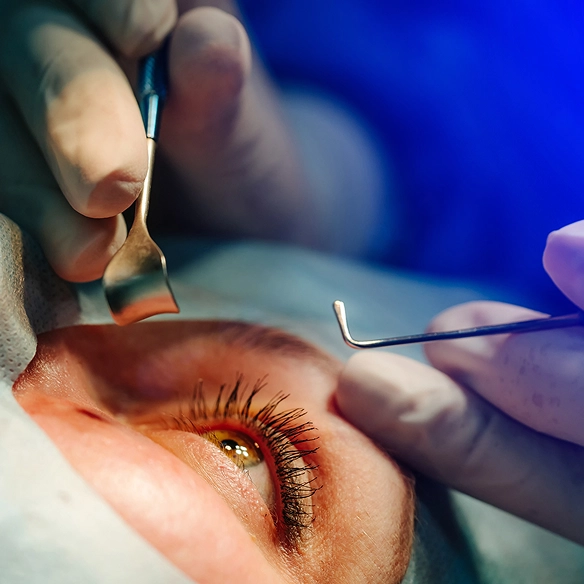
Post-LASIK Ectasia: This condition may occur after refractive surgery. In this case, the cornea becomes unstable and requires treatment.

Corneal thinning or irregularity, The cornea loses its normal structure. Consequently, vision may become distorted or blurry.

Patients at high risk Some patients show early warning signs. Therefore, early treatment is highly recommended.
How Is Cross-Linking Performed?
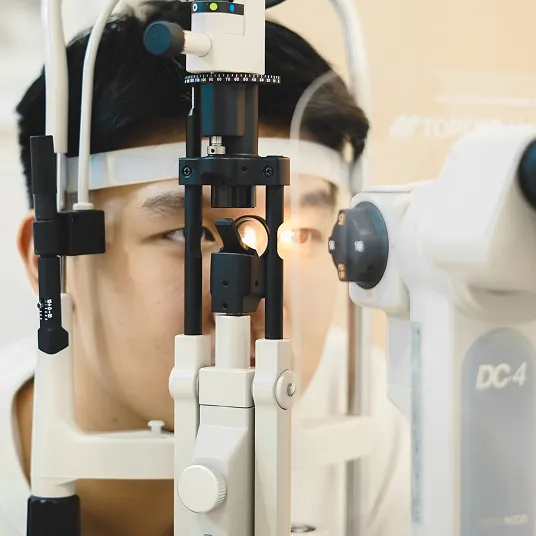
The doctor applies anesthetic eye drops to numb your eyes.
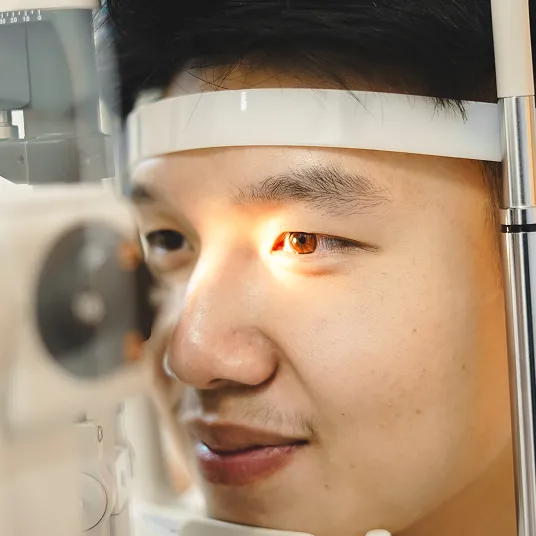
The doctor instills riboflavin drops onto the cornea.

The doctor directs UV-A light to activate the cross-linking process.
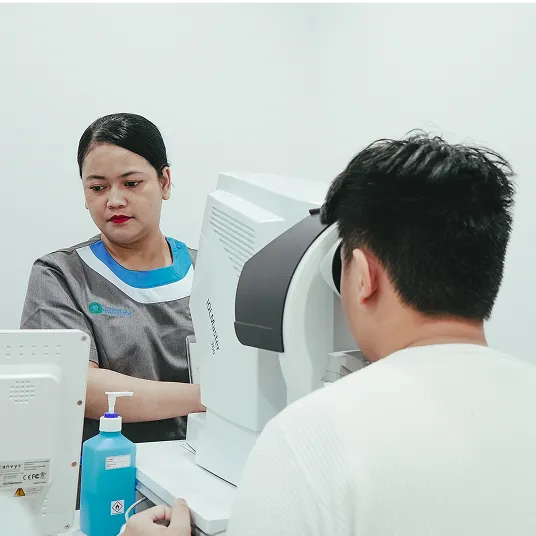
The procedure takes about 30–60 minutes.

After the procedure, the doctor places a bandage contact lens and provides medication to support healing.

Benefits of Cross-Linking
- Strengthens the cornea structure
- Reduces the risk of future corneal transplantation
- Improves corneal stability
- Helps preserve vision and prevent further deterioration
- Serves as a foundation for additional treatments when needed
FAQ
No. The procedure is performed using anesthetic eye drops and involves minimal discomfort.
It does not cure the condition, but it is highly effective in slowing down or stopping its progression.
As early as possible once keratoconus is detected, especially in teenagers and young adults.
Side effects are generally mild, such as dry eyes, temporary glare, or mild discomfort for a few days.

Free From Glasses and Contact Lenses, Life Becomes Easier
Register now and consult directly with our eye specialists for the best treatment for you.
