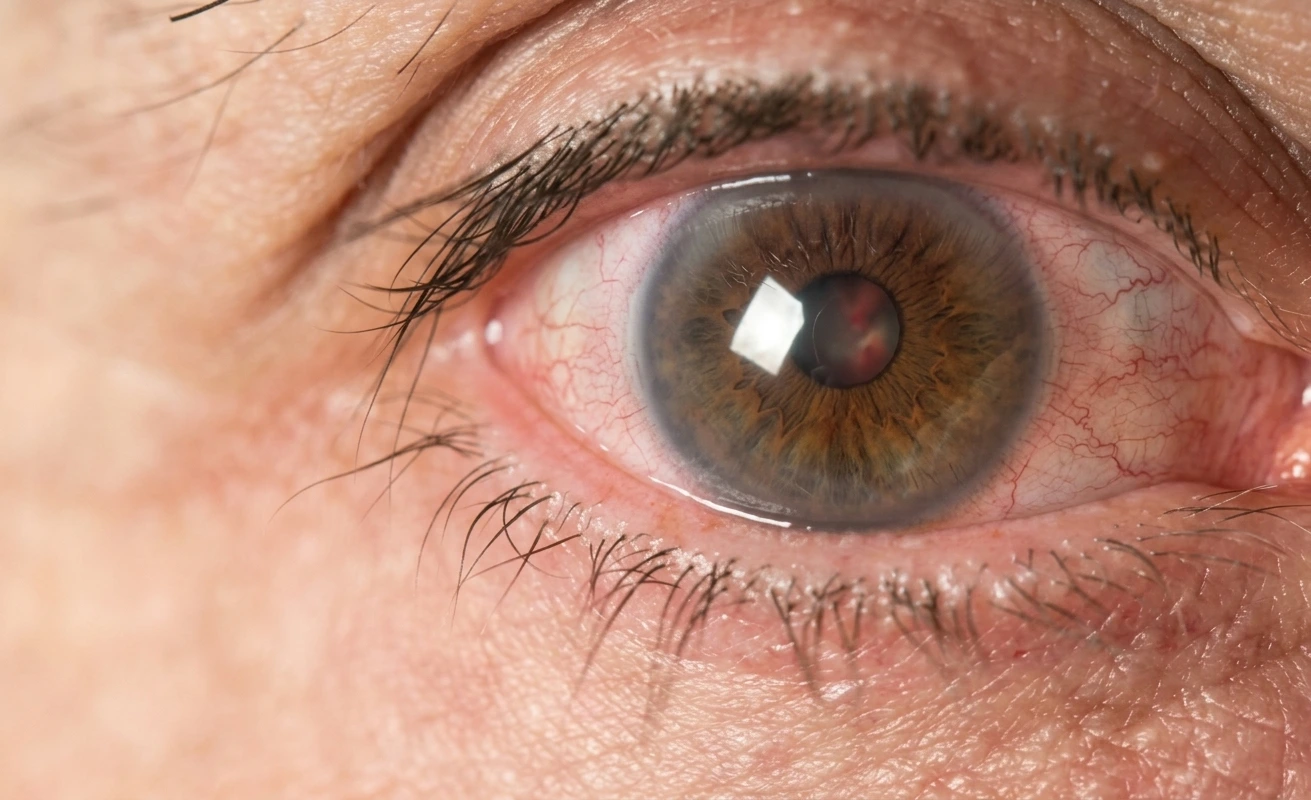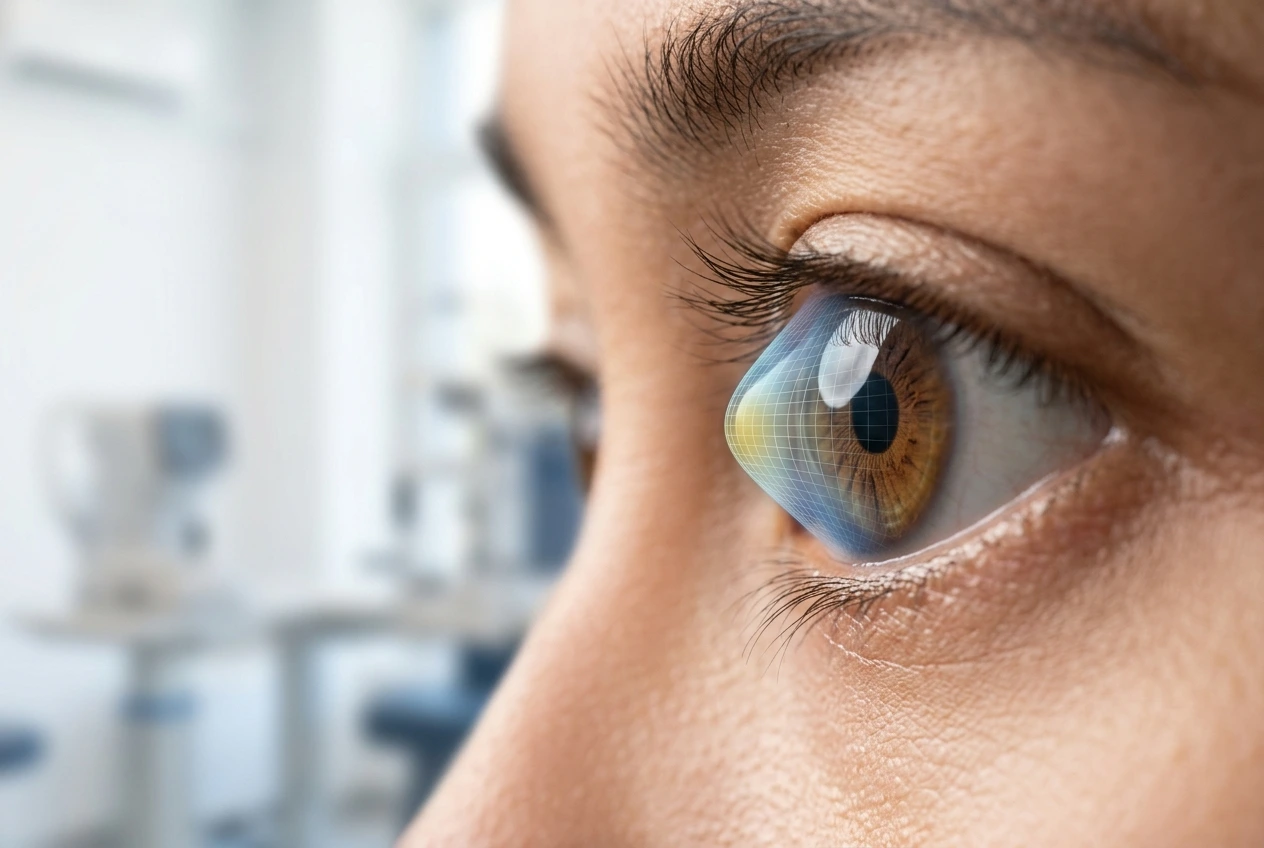
Cloudy vision is a condition where your eyesight feels as though it is covered by fog, smoke, or as if you are looking through frosted glass. This symptom may be associated with cataracts, corneal disorders, dry eye disease, or problems affecting the retina. If cloudy vision develops suddenly, affects only one eye, or is accompanied by eye pain or decreased vision, you should seek a comprehensive eye examination as soon as possible.
Why Does Vision Feel Cloudy?
Clear vision depends on several parts of the eye working together properly. Light must pass through a clear cornea and natural lens before reaching the retina. When the surface of the eye, cornea, lens, or retina is affected by disease or damage, vision quality may decline and appear cloudy or hazy.
The following conditions are commonly associated with cloudy vision.
- Cataracts
Cataracts are one of the most common causes of cloudy vision. They occur when the eye’s natural lens, which should normally be clear, becomes cloudy. According to the National Eye Institute, cloudy or blurry vision, faded colors, difficulty seeing at night, and increased sensitivity to glare are common symptoms of cataracts. Since cataracts usually develop gradually, many people may not notice the changes at first.
Common symptoms of cataracts include:- Cloudy or blurry vision
- Increased sensitivity to glare
- Difficulty seeing at night
- Halos around lights
- Colors appearing faded
- Frequent changes in eyeglass prescription
- Dry Eye Disease
Dry eye disease can also make vision appear unclear. An unstable tear film affects the smooth optical surface of the eye, causing vision to fluctuate throughout the day. Many people notice that their vision briefly improves after blinking before becoming blurry again.
Other symptoms may include:- A gritty or foreign body sensation
- Burning or stinging eyes
- Eye fatigue
- Excessive tearing
- Corneal Disorders
The cornea is the clear front surface of the eye that helps focus light. If the cornea becomes swollen, inflamed, infected, or loses its clarity, vision may appear cloudy.
Symptoms may include:- Red eyes
- Eye pain
- Excessive tearing
- Light sensitivity
- Reduced vision
- Acute Angle Closure Glaucoma
Glaucoma is a group of eye diseases that can damage the optic nerve. In acute angle-closure glaucoma, eye pressure rises rapidly and requires immediate medical attention.
Symptoms may include:- Blurred or cloudy vision
- Halos around lights
- Severe eye pain
- Red eye
- Headache
- Nausea or vomiting
- Retinal or Macular Disorders
The retina is located at the back of the eye and is responsible for processing visual information. The macula, located in the center of the retina, provides sharp central vision. Disorders affecting either structure may cause blurry or distorted central vision.
Symptoms may include:- Blurred central vision
- Straight lines appearing wavy
- Dark or missing areas in the field of vision
- Difficulty seeing fine details
- Changes in Eyeglass Prescription
Cloudy or unclear vision may also result from changes in nearsightedness, farsightedness, or astigmatism. Wearing an outdated prescription can make vision appear blurry. However, if your vision remains cloudy despite updated glasses, other parts of the eye should be evaluated. Replacing your glasses repeatedly will not solve the problem if the underlying cause is not a refractive error.
Is Cloudy Vision in Older Adults Always Caused by Cataracts?
Not necessarily.
Although cataracts become more common with age and frequently cause cloudy or hazy vision, corneal disorders, glaucoma, and retinal diseases can also affect vision in older adults. Therefore, cloudy vision should not automatically be assumed to be cataracts based solely on age or symptoms. A comprehensive eye examination is necessary to identify the actual cause.
Why Is My Vision Still Cloudy After Getting New Glasses?
Glasses correct refractive errors but cannot remove lens clouding caused by cataracts or treat diseases affecting the cornea or retina. If your prescription has been updated but your vision remains cloudy, a comprehensive eye examination can help determine whether another eye condition is responsible.
Can Cloudy Vision Go Away on Its Own?
It depends on the underlying cause.
Vision changes related to the eye’s surface, such as dry eye disease, may fluctuate depending on tear film quality. However, clouding caused by cataracts does not typically improve simply by waiting or changing eyeglass prescriptions. The National Eye Institute explains that cataracts occur when the eye’s natural lens becomes cloudy, and cataract surgery is the only effective treatment for removing the cloudy lens. Because each condition requires different management, persistent cloudy vision should always be evaluated by an eye specialist.
When Should Cloudy Vision Be Evaluated Immediately?
Seek prompt medical attention if cloudy vision:
- Develops suddenly
- Occurs suddenly in one eye
- Is accompanied by decreased vision
- Is associated with eye pain
- Is accompanied by eye redness
- Is associated with flashes of light
- Is accompanied by numerous new floaters
- Feels as though a curtain or shadow is blocking part of your vision
- Occurs after an eye injury
A dark shadow or curtain-like obstruction across your vision may indicate a serious retinal condition that requires urgent evaluation.
How Do Eye Doctors Determine the Cause of Cloudy Vision?
An ophthalmologist will usually perform a comprehensive eye examination to identify the underlying cause. This may include visual acuity testing and refraction to assess your vision, slit-lamp examination to evaluate the cornea and lens, and measurement of intraocular pressure when indicated. If a retinal or macular disorder is suspected, your doctor may examine the back of the eye and recommend additional imaging or diagnostic tests.
Not every case of cloudy vision is caused by cataracts. Identifying the exact location of the problem is essential before appropriate treatment can be recommended.
Don’t Assume Cloudy Vision Is Simply Part of Aging
Vision that feels as though it is covered by fog or smoke may be caused by cataracts, but it can also result from dry eye disease, corneal disorders, glaucoma, or retinal diseases. If your vision becomes increasingly cloudy, does not improve after updating your glasses, or begins interfering with daily activities such as reading or driving, schedule a comprehensive eye examination.
If your vision feels as though you are looking through fog or smoke, consult an ophthalmologist to determine the underlying cause and receive the appropriate treatment.
FAQ About Foggy Views
Cloudy vision may be associated with cataracts, dry eye disease, corneal disorders, glaucoma, or retinal diseases.
No. Cataracts are one possible cause, but a comprehensive eye examination is necessary to determine the exact reason for your vision changes.
Glasses only correct refractive errors. Cataracts and diseases affecting the cornea or retina may continue to cause cloudy vision even if your eyeglass prescription is accurate.
Yes. Cataracts can cause vision to appear cloudy, blurry, or hazy because the eye’s natural lens becomes opaque over time.
Seek immediate medical attention if cloudy vision develops suddenly or is accompanied by eye pain, redness, decreased vision, new floaters, flashes of light, or a curtain-like shadow blocking part of your vision.
Referensi:
National Eye Institute. Cataracts.
National Eye Institute. Causes of Cataracts.
National Eye Institute. Glaucoma.
National Eye Institute. Age-Related Macular Degeneration.
Nizami AA, et al. Cataract. StatPearls. Updated 2024.