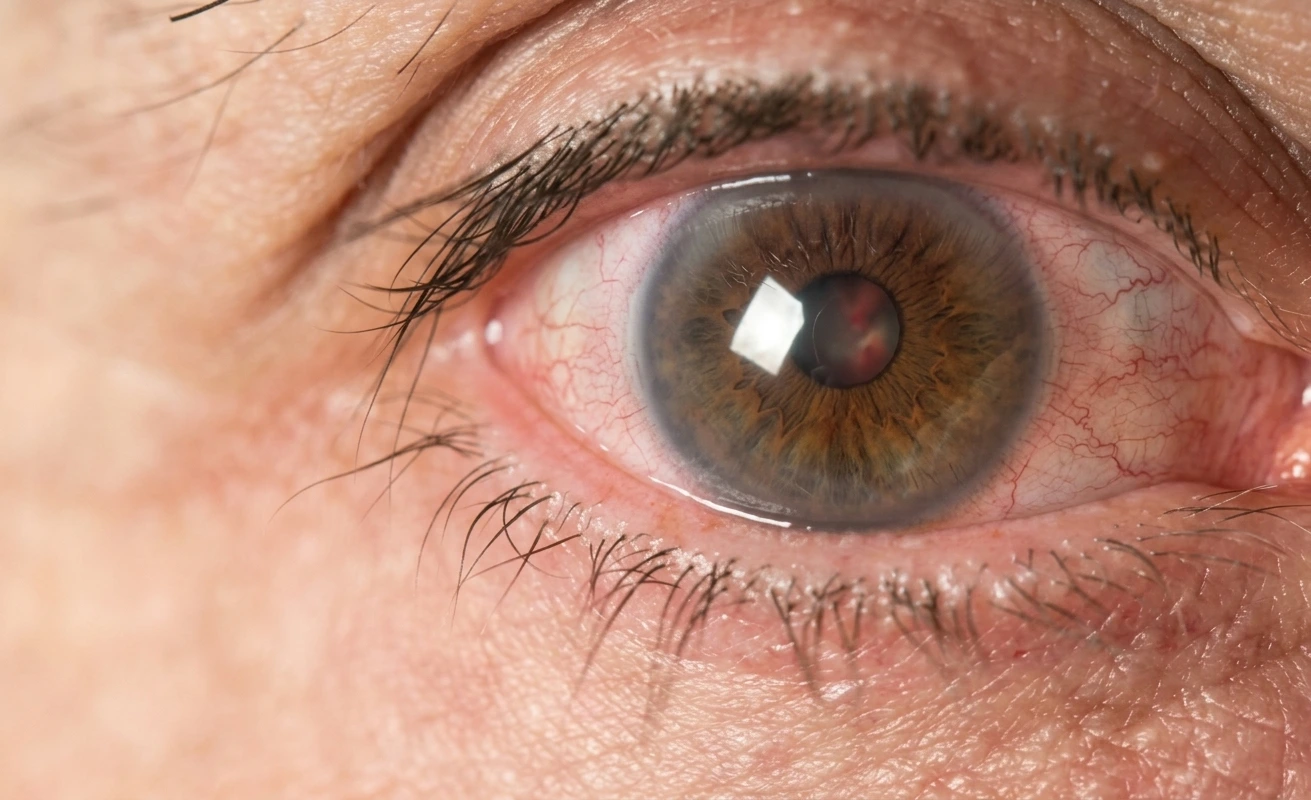
Black spots that appear to drift across your vision are commonly known as eye floaters. They may look like tiny dots, threads, lines, cobwebs, or transparent shadows that move as your eyes move.
Floaters are often associated with changes in the vitreous, the clear gel that fills the inside of the eye. However, if you suddenly notice a large number of new floaters, especially when accompanied by flashes of light or a curtain-like shadow over your vision, you should seek a comprehensive eye examination immediately.
What Are Eye Floaters?
Eye floaters are small shadows that appear to move across your field of vision. They are often more noticeable when looking at a bright, plain background, such as a clear sky, a white wall, or a computer screen.
Floaters may appear as:
- Black spots
- Tiny dots
- Lines or thread-like strands
- Cobweb-like shapes
- Transparent shadows
Why Do You See Floating Black Spots?
Most of the inside of the eye is filled with the vitreous, a clear, gel-like substance that helps maintain the eye’s shape. As we age, the vitreous naturally changes. Tiny fibers or clumps within the vitreous can cast shadows on the retina, which are perceived as floaters.
Scientific studies have shown that vitreous floaters are commonly associated with age-related changes in the vitreous, including posterior vitreous detachment (PVD).
- Age-Related Changes in the Vitreous
Natural aging is one of the most common causes of floaters. Over time, the vitreous gradually becomes more liquid and its internal structure changes. These changes can make shadows within the vitreous more noticeable, making floaters increasingly common with age. - Posterior Vitreous Detachment (PVD)
Posterior vitreous detachment (PVD) occurs when the vitreous separates from the retina. This condition becomes more common as people age. Most cases of PVD do not require treatment. However, as the vitreous pulls away, it may occasionally tug on the retina and create a retinal tear. For this reason, any sudden onset of new floaters should be evaluated by an ophthalmologist. - Retinal Tear
When the vitreous pulls on the retina, it can sometimes create a retinal tear.Symptoms of a retinal tear may include:- Sudden appearance of new floaters
- Rapid increase in the number of floaters
- Flashes of light
- Changes in vision
- Retinal Detachment
Retinal detachment occurs when the retina separates from its normal position. This is considered an eye emergency and requires immediate medical attention.Warning signs include:- Numerous new floaters
- Flashes of light
- A dark shadow in your vision
- A curtain-like effect across your visual field
- Blurred or decreased vision
- Inflammation Inside the Eye
Inflammation inside the eye, including uveitis, may also cause floaters. Other symptoms may include:- Red eyes
- Eye pain
- Light sensitivity
- Reduced vision
- Bleeding Inside the Eye
Bleeding into the vitreous (vitreous hemorrhage) can cause black spots, shadows, or blurred vision. Vitreous hemorrhage may occur due to several conditions, including retinal blood vessel disorders. People with diabetic retinal disease may also experience changes in vision caused by bleeding inside the eye.
Are Eye Floaters Dangerous?
Not all floaters are dangerous.
For many people, floaters result from normal age-related changes in the vitreous and do not indicate serious retinal disease. However, what matters most is a sudden change in the pattern of floaters. If you previously noticed only one or two floaters but suddenly develop many new ones, you should have your eyes examined as soon as possible especially if they are accompanied by flashes of light or dark shadows.
What Do Floaters and Flashes of Light Mean?
Flashes of light occur when the vitreous pulls on or mechanically stimulates the retina. They may appear as brief flashes, sparks, or streaks of light in your vision. Research on posterior vitreous detachment identifies floaters and flashes as the hallmark symptoms of PVD, which may increase the risk of a retinal tear. Therefore, new floaters accompanied by flashes should never be ignored.
When Should Floaters Be Examined Immediately?
Seek prompt medical attention if you experience:
- A sudden onset of many new floaters
- A rapid increase in the number of floaters
- Floaters accompanied by flashes of light
- A dark shadow in your vision
- A curtain-like shadow covering part of your visual field
- Blurred or reduced vision
- Floaters following an eye injury
How Do Eye Doctors Diagnose Floaters?
An ophthalmologist can perform a dilated eye examination to assess the vitreous and retina. This examination helps detect retinal tears, retinal detachment, and other retinal conditions that may require urgent treatment.
Additional diagnostic tests may be recommended depending on your symptoms and clinical findings. The primary goal of evaluating new floaters is to rule out retinal conditions that require immediate intervention.
Can Eye Floaters Go Away?
In many cases, floaters do not disappear completely, but they become less noticeable over time as the brain gradually adapts to their presence. Treatment depends on the underlying cause and the severity of visual symptoms. Most floaters caused by normal vitreous changes do not require treatment. However, if retinal tears, retinal detachment, vitreous hemorrhage, or other eye conditions are present, treatment will be tailored to the specific diagnosis.
Don’t Ignore a Sudden Increase in Floaters
Seeing one or two floating spots does not necessarily mean you have a serious retinal problem. However, a sudden change should never be ignored. A rapid increase in floaters, flashes of light, or a curtain-like shadow over your vision are warning signs that require immediate eye care. If you notice newly developed floaters or a sudden increase in floating black spots, schedule a comprehensive eye examination with an ophthalmologist to evaluate the health of your retina.
FAQ About Eye Floaters
Black spots that move as your eyes move are often eye floaters. They are typically caused by shadows cast by tiny structures within the vitreous onto the retina.
Floaters themselves do not usually cause blindness. However, the sudden appearance of new floaters may indicate a retinal tear or retinal detachment, both of which can threaten vision if left untreated.
Some floaters become less noticeable over time as your brain adapts to them. However, any new or suddenly increasing floaters should always be evaluated by an eye doctor.
Flashes of light may occur when the vitreous pulls on the retina. If flashes appear together with new floaters or a curtain-like shadow, seek immediate ophthalmic evaluation.
Reference:
National Eye Institute. Retinal Detachment.
National Eye Institute. Vitreous Detachment.
American Academy of Ophthalmology. What Are Floaters and Flashes?
Gishti O, et al. Symptoms Related to Posterior Vitreous Detachment and the Risk of Developing Retinal Tears. Acta Ophthalmologica. 2019.
Aleman AI, et al. Management of Vitreous Floaters: A Review. Current Opinion in Ophthalmology. 2024.